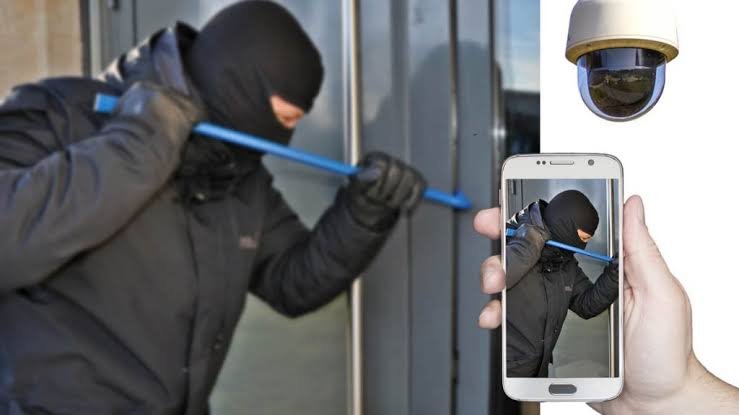
Security cameras can help businesses deter theft, investigate incidents, monitor entrances, and protect employees, customers, and physical assets. However, installing surveillance technology also creates responsibilities around privacy, access, storage, and the way recorded footage is used.
A technically effective CCTV system can still create unnecessary risk if cameras are positioned in inappropriate locations, recordings are accessible to too many people, or audio is captured without understanding applicable rules.
For Arizona businesses, CCTV planning should therefore include both security objectives and responsible data practices. Laws can vary depending on location, industry, workplace circumstances, and the type of information being recorded, so businesses with specific compliance questions should obtain appropriate legal advice.
The following principles provide a practical starting point for using commercial surveillance responsibly.
Do Have a Clear Security Purpose
Every camera should have a legitimate reason for being installed.
A retailer may need cameras near entrances, checkout areas, and inventory storage. A warehouse may prioritize loading docks, exterior gates, and high-value equipment. An office may focus on reception areas and controlled entry points.
Defining the purpose of each camera helps prevent unnecessary surveillance.
It also improves system design because installers can choose camera angles and equipment based on the security objective rather than simply trying to record as much of the property as possible.
Businesses working with AZ CCTV & Security can approach surveillance as a planned security system involving strategic camera placement, recording configuration, and integration rather than simply adding isolated cameras around a property.
Don’t Place Cameras Where Privacy Expectations Are High
Camera placement is one of the most important privacy considerations.
Businesses should be particularly cautious around areas where people have a reasonable expectation of privacy. Arizona law addresses certain forms of recording where privacy is reasonably expected, including circumstances involving dressing, undressing, restroom use, and similar private activities.
For ordinary commercial security planning, the safest approach is to keep cameras focused on legitimate security areas such as entrances, exits, hallways, transaction zones, parking areas, loading facilities, and other operational spaces.
A camera should not capture more private activity than is reasonably necessary for the security purpose it was installed to serve.
Do Consider Appropriate Notice
Visible surveillance can serve both privacy and security purposes.
Posting appropriate notice can inform employees, customers, visitors, and contractors that video surveillance is being used. Clear notice also reinforces the deterrent effect of visible cameras.
Arizona’s voyeurism statute specifically references clearly posted notice in a security-recording exception involving certain locations where privacy could otherwise be expected, illustrating why notice can be legally significant in some circumstances.
However, signage should not be treated as automatic permission to place cameras anywhere.
Businesses still need to consider whether the location itself is appropriate and whether additional industry, workplace, contractual, or other legal requirements apply.
Don’t Assume Video and Audio Follow the Same Rules
One of the most important distinctions in surveillance planning is the difference between recording images and recording conversations.
Many commercial cameras include microphones or can support audio recording, but enabling those features changes the privacy analysis.
Arizona law generally prohibits intentionally intercepting a conversation when the person recording is not present and no party to the conversation has consented. Arizona law also contains exemptions involving consent by a party to the communication or a person who is present.
Businesses should therefore avoid automatically enabling microphones simply because a camera supports them.
Before recording audio, determine whether it is necessary, how the feature operates, who may be recorded, and which state or federal rules apply.
This becomes especially important for companies operating in multiple states because recording laws can differ by jurisdiction.
Do Limit Who Can Access Footage
Recorded video should not be available to everyone in the organization.
Access should normally be limited according to job responsibilities.
A security manager may need access to cameras throughout a facility. A store manager may only need access to one location. A regional manager may require multiple sites, while ordinary employees may have no reason to view recorded surveillance at all.
Role-based permissions can reduce unnecessary exposure.
Businesses should also remove access when employees leave the company or change positions.
Shared administrator accounts should be avoided whenever the platform supports individual user credentials because individual accounts provide better accountability over who can access security information.
Don’t Leave Default Passwords in Place
Modern IP surveillance systems are connected computing devices.
That means CCTV security includes cybersecurity.
Leaving default usernames or passwords active can create unnecessary vulnerabilities. Remote access should use strong authentication, and administrative privileges should be restricted.
Software and firmware should also be maintained appropriately.
If cameras, recorders, or management platforms become outdated and no longer receive suitable security updates, businesses should consider whether those devices remain appropriate for continued use.
Protecting surveillance footage requires protecting the network infrastructure that stores and transmits it.
Do Create a Practical Retention Policy
Businesses often focus on camera resolution while overlooking how long recordings remain available.
A retention policy should reflect actual operational needs.
For example, a retail business that usually discovers inventory discrepancies several weeks later may require a different retention period from an office where most incidents are reported immediately.
Keeping footage for too little time can make investigations difficult.
Keeping every recording indefinitely can create unnecessary storage costs and increase the amount of surveillance data the organization must protect.
A practical retention strategy considers business requirements, insurance expectations, litigation holds, contractual obligations, industry rules, and applicable law.
When footage becomes relevant to an incident or investigation, businesses may need to preserve it longer than the normal deletion cycle.
Don’t Collect More Footage Than You Need
More surveillance is not automatically better surveillance.
A camera intended to monitor a doorway does not necessarily need to capture neighboring properties, unrelated workspaces, or areas beyond the security objective.
Careful camera positioning can reduce unnecessary collection while improving useful coverage.
This principle also applies to features.
If a business does not need audio, facial analysis, extended cloud retention, or another advanced capability, enabling it simply because the system supports it may increase privacy and security responsibilities without providing meaningful operational value.
Choose features because they solve a defined security problem.
Do Protect Exported Video
Security footage becomes especially sensitive when it is downloaded or exported from the primary surveillance platform.
A video copied onto an unsecured laptop, USB drive, personal phone, or shared folder may no longer benefit from the protections built into the CCTV system.
Organizations should establish procedures for exporting footage.
Only authorized users should create copies, and recordings should be stored and transferred securely.
Businesses should also think carefully before distributing surveillance footage publicly or posting incidents on social media.
Footage collected for security purposes should generally remain connected to legitimate business, investigative, insurance, or legal needs rather than becoming entertainment content.
Don’t Forget About Cloud Security
Cloud-managed CCTV can provide useful benefits, including remote access, centralized management, and easier oversight of multiple properties.
However, businesses should understand where recordings are stored and how accounts are protected.
Ask what authentication options are available, how permissions are managed, and what happens when an employee with access leaves the organization.
Organizations should also understand whether video is stored locally, in the cloud, or through a hybrid configuration.
Knowing where data exists makes it easier to manage retention and access responsibly.
Do Review Employee Surveillance Carefully
Workplace cameras can support safety, theft prevention, access management, and incident investigations.
However, employers should think carefully about the purpose and location of employee monitoring.
Employees should not automatically be recorded everywhere simply because the company owns the building.
Focus cameras on legitimate security and operational risks.
Businesses should also review employment policies, notices, contracts, industry requirements, and applicable federal and state rules when employee monitoring is involved.
Clear internal policies can help explain why surveillance exists and who is authorized to review footage.
Don’t Ignore Camera Fields of View
Privacy problems can sometimes result from camera configuration rather than the intended installation location.
An exterior camera meant to cover a company entrance might also capture windows or private areas on a neighboring property.
A wide-angle camera inside a facility may record areas that were never intended to be monitored.
After cameras are installed, businesses should review the actual recorded image rather than simply checking whether the device is online.
Privacy masking features may be available on some systems to block unnecessary portions of the image while preserving coverage of the important security area.
Do Document Your Surveillance Practices
Businesses benefit from having basic internal documentation explaining how CCTV is managed.
The policy can identify why cameras are used, who is authorized to access recordings, how long footage is normally retained, and what process should be followed when footage needs to be exported.
Documentation becomes increasingly important as organizations grow.
Without clear procedures, different managers may handle surveillance information differently, resulting in inconsistent retention, excessive access, or unnecessary sharing.
A straightforward policy can improve accountability without making everyday security management overly complicated.
Don’t Treat Legal Compliance as a One-Time Task
Security technology evolves quickly.
Modern cameras may include microphones, cloud storage, artificial intelligence, advanced analytics, facial features, and other capabilities that were uncommon in older CCTV installations.
Turning on a new feature can change what information the business collects and how that information should be handled.
Laws can change as well.
Businesses should periodically review their surveillance practices, particularly after expanding into new states, implementing advanced analytics, moving recordings to cloud platforms, or changing the purpose for which cameras are used.
Build Security and Privacy Together
Effective CCTV does not require choosing between protecting a property and respecting privacy.
The strongest systems are designed around both objectives.
Businesses should place cameras where legitimate security risks exist, avoid inappropriate private areas, consider appropriate notice, control access to footage, protect network-connected equipment, establish sensible retention periods, and evaluate audio recording separately from video.
They should also periodically review whether existing cameras and features still serve a real business purpose.
Surveillance technology is most valuable when footage is clear, accessible to the right people, protected from unauthorized use, and collected for clearly defined security reasons.
By treating privacy and data management as part of CCTV planning from the beginning, businesses can create security systems that provide useful evidence and operational visibility without collecting or exposing more information than necessary.