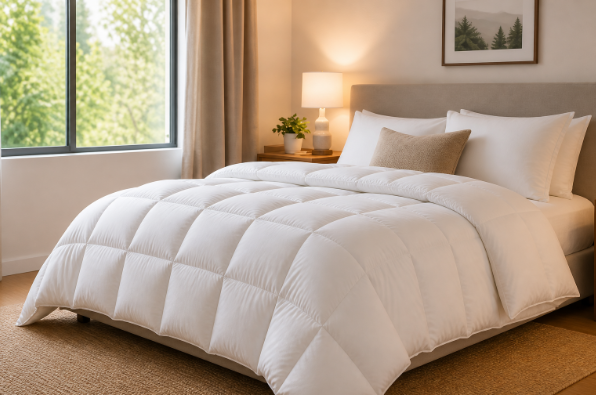
September has a way of nudging people to update their bedroom before they even think about their closet. The nights start cooling unevenly — warm one evening, noticeably crisper the next — and that in-between stretch is exactly when the wrong comforter shows itself: too heavy some nights, not quite enough on others. It’s also the easiest window to make one simple swap instead of a full seasonal overhaul.
Why Organic Cotton Keeps Coming Up This Time of Year
Early fall shopping tends to circle back to the same fabric for a reason. Organic cotton isn’t flashy, but it solves the exact problem September creates — a shell breathable enough for a mild evening and substantial enough once the temperature actually drops. It also appeals to anyone trying to make more sustainable choices heading into a new season, since organic growing methods skip the synthetic pesticides and fertilizers used in conventional cotton production.
The Fabric That Gets Softer, Not Older
A cheap cotton shell tends to go the other direction over time — pilling, thinning, stiffening after enough washes. Organic cotton generally does the opposite: it softens gradually with use instead of breaking down, which is why people often say their comforter feels better six months in than it did on day one. The Organic Cotton Goose Down Comforter is built around that expectation, pairing a durable organic cotton shell with goose down proportioned to stay light rather than dense, so it doesn’t feel like overkill on the warmer September nights still mixed in with the cooler ones.
Breathable Enough for September’s In-Between Nights
This is really the whole case for organic cotton in early fall: it doesn’t force you to pick between too warm and too cold. A shell like the one on the Organic Cotton Goose Down Comforter stays breathable enough that a slightly warmer evening doesn’t feel stifling, while the goose down underneath still provides real coverage once the room actually cools off overnight. That flexibility matters more in September than in the dead of winter, when the answer is simply “warmer is better.”

A Simple, Sustainable Swap for the Season
Not every seasonal bedding change needs to be complicated. If your current comforter has felt like a compromise the last few weeks — either too warm to fall asleep under or too thin to stay comfortable by early morning — an organic cotton down comforter is one of the more dependable places to start. Choosing the Organic Cotton Goose Down Comforter means making that swap without also taking on a fabric that requires special care or a narrow climate window; it’s designed to just work, night after night, as the season shifts underneath it.
The Bottom Line
September rewards simple decisions, and an organic cotton down comforter is about as simple as bedding upgrades get. It breathes well enough for the warmer nights still lingering, holds enough warmth for the cooler ones arriving, and gets softer rather than older with regular use — all while leaning into a more sustainable choice at the start of a new season. If your bed has felt slightly wrong for the last few weeks, this is usually the fix.
FAQ
Is organic cotton warm enough for early fall nights?
Yes, when it’s paired with a properly proportioned goose down fill. The organic cotton shell keeps things breathable on milder evenings, while the down underneath provides real warmth once temperatures drop further.
Why does organic cotton feel different from regular cotton over time?
Organic cotton is processed without the chemical treatments used in conventional cotton, which tends to preserve the fiber’s natural softness. Many people notice it actually improves with washing instead of thinning or stiffening.
Is now a good time to switch to a new comforter?
September’s shifting temperatures make it a practical time to reassess. A breathable, moderately warm option like an organic cotton down comforter tends to handle the unpredictable stretch between summer and full autumn better than either a heavy winter piece or an ultra-light summer one.