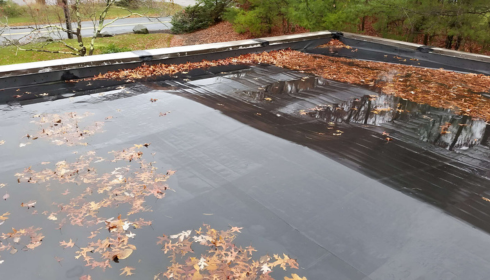
Flat roofs are rarely perfectly flat; they should have a slight slope that guides water towards drains. After a decent rain, most of the water should disappear in a reasonable time. If you go up and see large puddles still sitting hours later, it suggests drainage isn’t working properly.
Standing water stresses the waterproofing layers, increases the chance of leaks, and encourages algae or mosquito breeding. Over time, it can seep through tiny weaknesses in the surface and show up as damp patches in ceilings below.
By checking for these ponds after rain, you get an early signal that something needs adjusting – maybe drains are blocked, slopes are wrong, or depressions have formed. Fixing that now is far better than dealing with full-blown leaks and structural damage later.