It usually starts with something small. White marks appear around the kitchen tap, soap seems reluctant to lather, and the kettle develops a crusty layer that no amount of quick rinsing will remove. You clean everything, carry on with your day, and then the same problems return a week later. Sound familiar?
Hard water is a common household issue, particularly in areas where groundwater contains high levels of dissolved calcium and magnesium. Although it’s generally not considered a health risk simply because it’s hard, it can make everyday cleaning more frustrating and contribute to mineral scale inside plumbing and appliances.
Fortunately, you don’t have to put up with these problems indefinitely. Understanding your water quality, exploring suitable treatment options, and maintaining your equipment can make a noticeable difference. The trick is knowing what your home actually needs before investing in a solution.
Why Hard Water Creates So Many Household Problems
Hard water isn’t dirty water. In fact, it can look perfectly clear and have no unusual smell at all. The issue lies in the minerals dissolved within it, which become more noticeable during washing, heating, and cleaning.
When hard water is heated, calcium and magnesium can form deposits on kettle elements, water heaters, and other surfaces. Over time, these deposits may reduce heating efficiency or increase maintenance requirements. Showerheads can become clogged, taps may develop stubborn white spots, and glassware can look cloudy even after a thorough wash.
Then there’s the soap problem. Minerals in hard water react with soap, reducing lather and sometimes leaving a residue on skin, hair, and fabric. You might find yourself using more detergent than expected, only to wonder why your clothes still feel stiff.
These small inconveniences add up. And while occasional descaling can help, it doesn’t address the underlying mineral content of the water.
The first step is to determine whether hardness is genuinely the cause. Similar symptoms can result from other water-quality issues, so it’s worth checking before purchasing treatment equipment.
Understanding Water Softening Systems
For households dealing with persistent hardness, water softening systems can offer a practical long-term solution. These systems are designed to reduce the calcium and magnesium responsible for many common hard-water problems.
Traditional ion-exchange softeners work by passing water through a resin that captures calcium and magnesium ions and releases sodium or potassium ions in their place. When the resin becomes saturated, the system regenerates, typically using a concentrated salt solution to restore its capacity.
The difference can be noticeable in everyday life. Soap may lather more easily, mineral deposits can become less troublesome, and cleaning bathroom fittings may take less effort. Depending on the household and its existing appliances, softened water may also help reduce scale buildup in water heaters and plumbing equipment.
Still, softeners aren’t magic machines. They don’t automatically remove bacteria, pesticides, or every dissolved chemical. Their primary purpose is to address hardness, not provide complete drinking-water purification.
There’s also the question of sodium. Salt-regenerated softeners add some sodium to the treated water, with the amount depending partly on the original hardness. Households concerned about sodium intake may want a separate drinking-water arrangement or advice from a qualified water-treatment professional.
Before choosing a unit, consider the hardness level, household water consumption, available installation space, and expected maintenance costs. A properly sized system is usually a better investment than the biggest model available.
Why a Water Test Is Worth Your Time
Buying a water softener without checking your water is a little like replacing a perfectly good appliance because you suspect something might be wrong. You could get lucky, but you might also spend money unnecessarily.
A free water test can be a useful starting point when offered by a local water-treatment company or service provider. Depending on the provider, it may include a basic hardness measurement and a discussion of possible treatment options.
However, understand what you’re being offered. Some free assessments are simple demonstrations intended to introduce customers to particular products. They may not provide a complete analysis of drinking-water safety or detect contaminants such as arsenic, nitrate, or harmful microorganisms.
For a clearer picture, ask which parameters are measured and whether the results are provided in writing. If your water comes from a borewell or private groundwater source, consider using a qualified laboratory to test for locally relevant contaminants as well as hardness.
Useful measurements may include total hardness, pH, total dissolved solids, and specific substances associated with your water source. The exact testing requirements depend on local conditions.
A basic hardness test can help determine whether softening is worthwhile. A more comprehensive analysis may reveal that your main concern requires an entirely different treatment method. Either way, knowing the facts puts you in a much stronger position.
The Role of Salt Delivery and Regular Maintenance
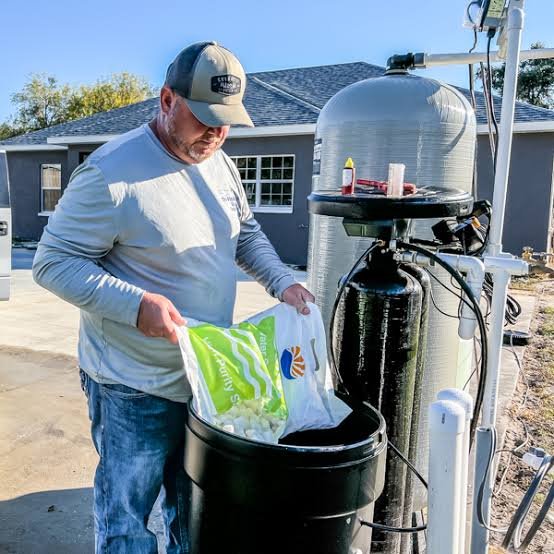
A salt-based softener needs more than installation to keep working properly. Its resin must regenerate periodically, and the system needs an adequate supply of the appropriate regeneration salt.
That’s where salt delivery services can make household maintenance more convenient. Rather than discovering an empty brine tank at the worst possible moment, homeowners can arrange scheduled deliveries based on their water use and the softener’s requirements.
The right delivery frequency depends on several factors, including water hardness, household size, system capacity, and regeneration settings. A large family using substantial amounts of water may need salt more often than a couple living in a smaller property.
It’s worth checking which salt products your equipment manufacturer recommends. High-purity water-softener salt can help limit unwanted residue in the brine tank, although the correct type depends on the system.
Don’t assume that adding more salt will solve every performance problem, either. A bridged layer of salt, a blocked component, incorrect settings, or a mechanical fault can prevent proper regeneration even when the tank appears full.
A quick visual inspection now and then can save an inconvenient service call later. Keep the brine tank reasonably clean, follow the manufacturer’s instructions, and arrange professional servicing if the system stops softening water effectively.
Choosing the Right Solution for Your Home
Not every household needs the same equipment. A home with severe hardness may benefit from a conventional softener, while another property might need only occasional descaling and routine plumbing maintenance.
Start by thinking about the problem you want to solve. If white scale is accumulating on fixtures and appliances, investigate hardness. If the water tastes unpleasant, look into possible causes such as chlorine or other contaminants. If sediment is appearing in storage tanks, a suitable sediment filter may help.
These problems can overlap, but they shouldn’t be treated as identical. A water softener doesn’t reliably disinfect water or remove every chemical contaminant. Similarly, a standard carbon filter won’t necessarily reduce hardness.
Ask potential suppliers for clear explanations of their equipment, including what it removes, what it doesn’t remove, and how its performance is verified. Request a breakdown of installation charges, replacement materials, servicing, and expected running costs.
It’s also sensible to compare service availability. Equipment that depends on regular salt replenishment or specialised replacement parts can become frustrating if support is difficult to obtain.
Most importantly, avoid making decisions based entirely on sales demonstrations. Independent test results and clearly documented product capabilities are far more useful than impressive claims about water quality.
Small Changes That Help Between Treatments
Even without installing a new system immediately, a few simple habits can make hard water easier to manage.
Wiping taps and shower screens dry after use helps prevent mineral spots from becoming stubborn deposits. Descaling kettles according to the manufacturer’s instructions can keep heating elements cleaner. Using detergent in the recommended amount, rather than automatically adding extra, may also improve washing results.
If you have a water heater, follow its maintenance recommendations and investigate unusual noises or reduced heating performance. Scale isn’t always responsible for these symptoms, but it can be one contributing factor.
Keep in mind that softening water isn’t the only way to maintain appliances. Regular cleaning, sensible detergent use, and timely repairs remain worthwhile even after treatment equipment is installed.
A Better Approach to Everyday Water Quality
Hard water can be an irritating part of household life, but dealing with it doesn’t need to become an expensive guessing game. A little investigation goes a long way.
Start by understanding your water source and measuring its hardness. Choose a treatment system only when the results and your household needs justify it, then keep up with routine maintenance. If you choose a salt-based softener, plan for replenishment and servicing from the beginning.
Good water management isn’t about buying the most sophisticated equipment on the market. It’s about solving the right problem with a system that works reliably for your home.
Once you understand what’s happening inside your pipes, those stubborn white marks and recurring cleaning frustrations become much easier to tackle. And that’s a practical improvement you’ll appreciate long after the installation is finished.