Proper spacing between deck boards is one of the most critical yet frequently overlooked aspects of outdoor wood construction and maintenance. The gaps running between deck planks serve essential structural, functional, and environmental purposes, ensuring that rainwater drains efficiently, air circulates freely beneath the framing, and natural building materials have room to expand and contract. Without appropriate spacing, an exterior platform quickly becomes vulnerable to moisture accumulation, surface warping, board buckling, and accelerated wood rot. Understanding the science behind deck board spacing, how different materials react to atmospheric changes, and how to address improper gaps allows homeowners to preserve the structural integrity and aesthetic appeal of their outdoor living spaces.
The Purpose and Science Behind Deck Board Gaps
Spacing between deck boards is not merely a cosmetic choice; it is a fundamental engineering requirement for exterior wood structures. When outdoor platforms are exposed to environmental elements, water runoff and airflow management dictate the longevity of the framing beneath.
The primary function of board spacing is water drainage. During rainstorms, water landing on a deck surface must find an immediate path downward. Gaps act as localized channels, preventing water from pooling across planks. If water remains trapped on the surface or inside narrow crevices, it penetrates protective stains, softens wood fibers, and creates an environment where mold, algae, and decay fungi thrive.
| Function | Operational Mechanism | Risk of Improper Spacing |
| Water Drainage | Allows rainwater to flow freely off surface boards | Standing water, surface mildew, rot |
| Sub-Deck Ventilation | Enables continuous airflow beneath joists and posts | Trapped ground moisture, framing decay |
| Thermal & Moisture Expansion | Accommodates natural swelling of timber fibers | Board cupping, buckling, screw shear |
| Debris Shedding | Permits small dirt particles to wash through | Clogged joints, localized rot pockets |
Equally important is sub-deck ventilation. Air must flow continuously underneath joists, beams, and support posts to evaporate ground moisture and ambient humidity. Proper spacing between surface boards creates a chimney effect, drawing cool air up and allowing damp air to escape. This constant circulation prevents the underside of deck boards from remaining perpetually wet while the top side dries in the sun, a condition that inevitably leads to severe cupping and warping.
How Material Types Influence Gaps
Not all decking materials react to environmental conditions in the same manner. The ideal gap size during installation depends heavily on the moisture content, density, and thermal expansion properties of the specific material being installed.
Pressure-Treated Lumber
Pressure-treated pine is infused with waterborne chemical preservatives during manufacturing. As a result, new pressure-treated boards arrive at job sites in a high-moisture state, often referred to as wet wood.
Because these planks contain high internal moisture levels when installed, they shrink significantly as they dry under direct sun exposure. Installers typically butt wet pressure-treated boards tight against one another with minimal or zero gap. Over the following weeks and months, as the internal water content evaporates, the boards shrink naturally, creating uniform gaps of one-eighth to three-sixteenths of an inch. If wet pressure-treated boards are installed with wide gaps initially, the subsequent drying process yields excessively wide openings.
Kiln-Dried Wood and Cedar
Materials like Western Red Cedar, Redwood, and kiln-dried pressure-treated lumber have already undergone controlled drying before reaching the job site. Because these materials contain low internal moisture, they will expand when exposed to high ambient humidity or rain.
Kiln-dried planks must be installed with intentional, pre-measured gaps, typically one-eighth to one-quarter of an inch wide. Installing dry cedar boards flush against each other leaves no room for expansion during humid spells. When the wood swells, neighboring planks push against each other, causing the boards to buckle upward, pull away from joist fasteners, or split along the grain.
Composite and PVC Decking
Composite decking, composed of recycled wood fibers and synthetic polymers, behaves differently than solid timber. While wood primarily expands and contracts across its width in response to moisture, composite and PVC boards undergo thermal expansion along their length in response to temperature changes.
Composite board spacing must account for both edge-to-edge gaps and end-to-end butt joints. Manufacturers specify exact gap tolerances based on ambient installation temperatures. Installing composite planks on a freezing winter day requires wider end gaps to allow for summer heat expansion, whereas summer installations require tighter tolerances.
Common Problems Caused by Incorrect Spacing
Flaws in deck board spacing manifest in several distinct ways, each creating unique maintenance and structural challenges for property owners.
- Gaps That Are Too Narrow: When boards are placed too close together, leaves, twigs, and pine needles become trapped in the narrow slits. This trapped organic matter holds moisture against the wood edges, acting like a damp sponge that accelerates wood decay. Additionally, when planks swell during heavy rains, tight spacing forces boards to push against each other, causing edge cupping and fastener shear.
- Gaps That Are Too Wide: Excessively wide gaps pose safety hazards, particularly for small pets, high-heeled footwear, and patio furniture legs. Wide openings also expose the underlying structural joists to direct sunlight and heavy rainfall, accelerating wear on the sub-frame framing.
- Uneven or Irregular Spacing: Inconsistent gaps along board runs are visually distracting and indicate underlying structural movement or poor initial installation. Irregular spacing often occurs when boards are installed along warped joists or when fasteners lose their grip on sagging framing.
Addressing structural issues early prevents localized damage from spreading across the entire framework. For homeowners experiencing board movement, structural sagging, or decaying joists, professionaldeck repair Austin services evaluate underlying framing health, reset board spacing, and replace damaged structural members to restore overall safety and stability.
Correcting Improper Deck Board Spacing
Remediating spacing problems requires identifying whether the issue stems from organic debris, natural wood movement, or installation errors.
Clearing Debris-Clogged Gaps
When gaps become clogged with dirt and decomposed leaves, mechanical clearing is necessary. Homeowners should avoid using sharp metal blades that can gouge wood fibers or slice protective composite caps. Instead, a flexible plastic putty knife, a stiff-bristled gap brush, or a specialized deck clearing tool can gently dislodge packed debris. Following manual clearing, washing the surface with a garden hose or low-pressure washer clears remaining sediment from between the boards.
Resetting and Re-Spacing Boards
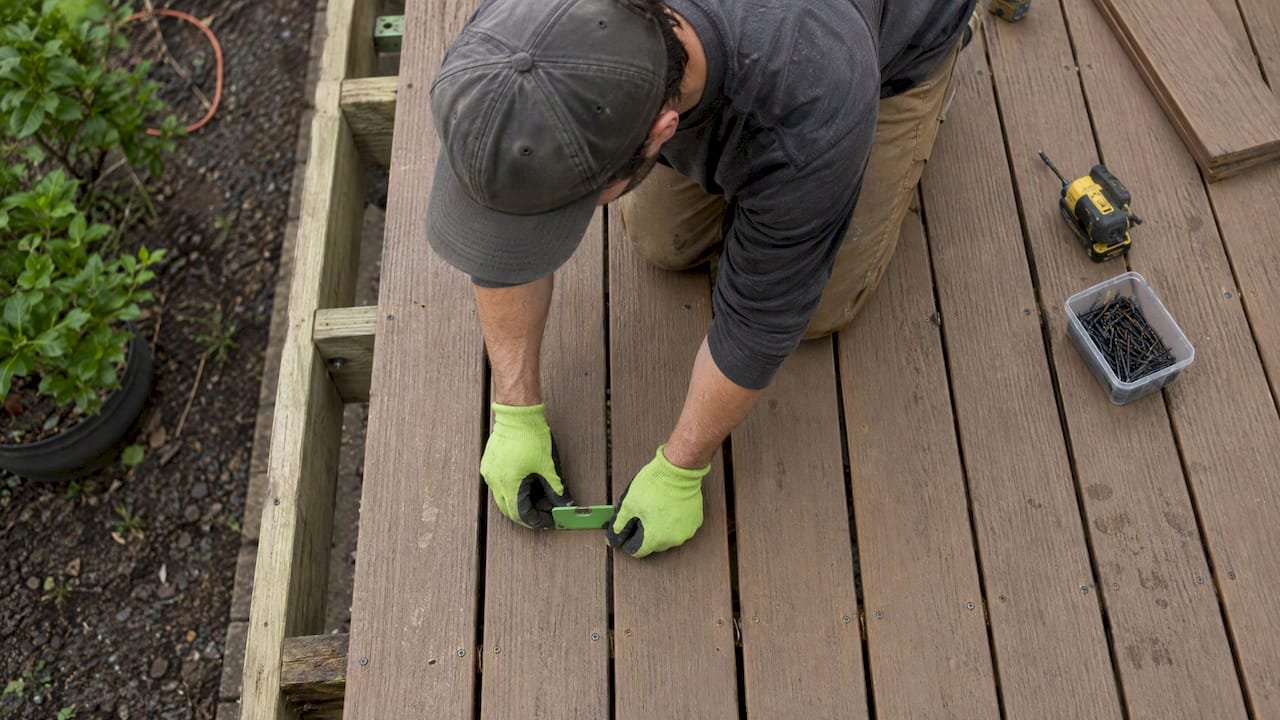
If boards were installed with improper spacing that leads to buckling or severe drainage failure, physical re-spacing may be required. This process involves unscrewing affected board runs, clearing accumulated dirt from the joist tops, inspecting the underlying framing for rot, and reinstalling the planks using consistent deck spacers.
During reinstallation, utilizing structural deck spacers or plastic gap gauges ensures uniform alignment down the entire length of the deck. Utilizing proper exterior-grade stainless steel or coated deck screws during reassembly ensures the boards remain firmly anchored against future thermal movement.
Conclusion
Understanding deck board gaps is vital for maintaining a durable, functional, and visually appealing outdoor platform. Proper spacing regulates water drainage, fosters airflow, and accommodates the natural swelling and shrinking cycles of wood and synthetic building materials. By selecting the right gap dimensions for specific decking products, routinely clearing debris from between planks, and addressing structural spacing flaws promptly, property owners can protect their framing investment and enjoy a safe outdoor living space for years to come.
Related Home Guides

How can scheduling roof checks just before and just after monsoon or storm season prevent bigger damage?
What might peeling or bubbled roof coatings suggest about the condition of the layers underneath?