Selecting the right tile for a swimming pool finish is a critical decision that influences both the aesthetic character and structural durability of an outdoor water feature. Pool tile does more than serve as a decorative accent; it acts as a protective barrier along the waterline where water, air, sunlight, and pool chemicals interact continuously. Choosing the ideal material, texture, size, and color requires balancing visual preferences against long-term maintenance needs, slip resistance, and chemical compatibility. Understanding how different tile materials perform, how water chemistry interacts with surfaces, and how installation standards affect longevity allows homeowners to select a pool tile finish that remains vibrant and intact for years to come.
The Functional and Aesthetic Role of Pool Tile
While plaster or pebble aggregate coats the interior basin of a swimming pool, tile is traditionally applied along the top six inches of the wall, known as the waterline. This region experiences continuous exposure to fluctuating water levels, body oils, sunscreen, fluctuating chemical concentrations, and direct sunlight.
Pool tile serves several primary functions:
- Waterline Protection: Unprotected pool plaster along the waterline quickly absorbs minerals, body oils, and scum, leading to dark, stubborn ring stains. Non-porous pool tile provides a smooth surface that resists staining and can be wiped clean easily.
- Preventing Water Line Scaling: Evaporation leaves behind calcium deposits along the pool perimeter. Tile surfaces withstand mild acid washing and gentle scraping far better than raw concrete or plaster finishes.
- Visual Framing: Tile creates a clean visual border that bridges the gap between the submerged pool interior and the dry coping deck surrounding the basin.
- Accenting Structural Features: Applying tile to step edges, bench outlines, shallow tanning ledges, and raised spa spillways enhances safety by making submerged level changes clearly visible while adding custom architectural flair.
Material Options for Pool Tile Finishes
Evaluating pool tile starts with selecting the right material base. The three primary materials used in residential pool finishes are ceramic, porcelain, and glass, each offering distinct performance characteristics and visual effects.
Ceramic Pool Tile
Ceramic tile is a traditional, widely used choice for residential pool surrounds. Made from fired clay glazed with a protective coating, ceramic tile is available in an extensive range of colors, painted patterns, and hand-crafted styles. It is easy to cut and install, making it a cost-effective option for classic waterline designs. However, ceramic is slightly more porous than porcelain or glass, meaning it can absorb small amounts of water over time if the protective glaze becomes chipped or worn.
Porcelain Pool Tile
Porcelain is manufactured from denser clay fired at significantly higher temperatures than standard ceramic, rendering it virtually non-porous and frost-proof. Porcelain tiles absorb less than 0.5 percent of moisture, making them exceptionally resistant to freeze-thaw cycles, heavy UV exposure, and pool chemical degradation. Porcelain is available in smooth, matte, or textured finishes, and it can accurately replicate natural materials like slate, stone, or terra cotta without the high maintenance demands of raw stone.
Glass Pool Tile
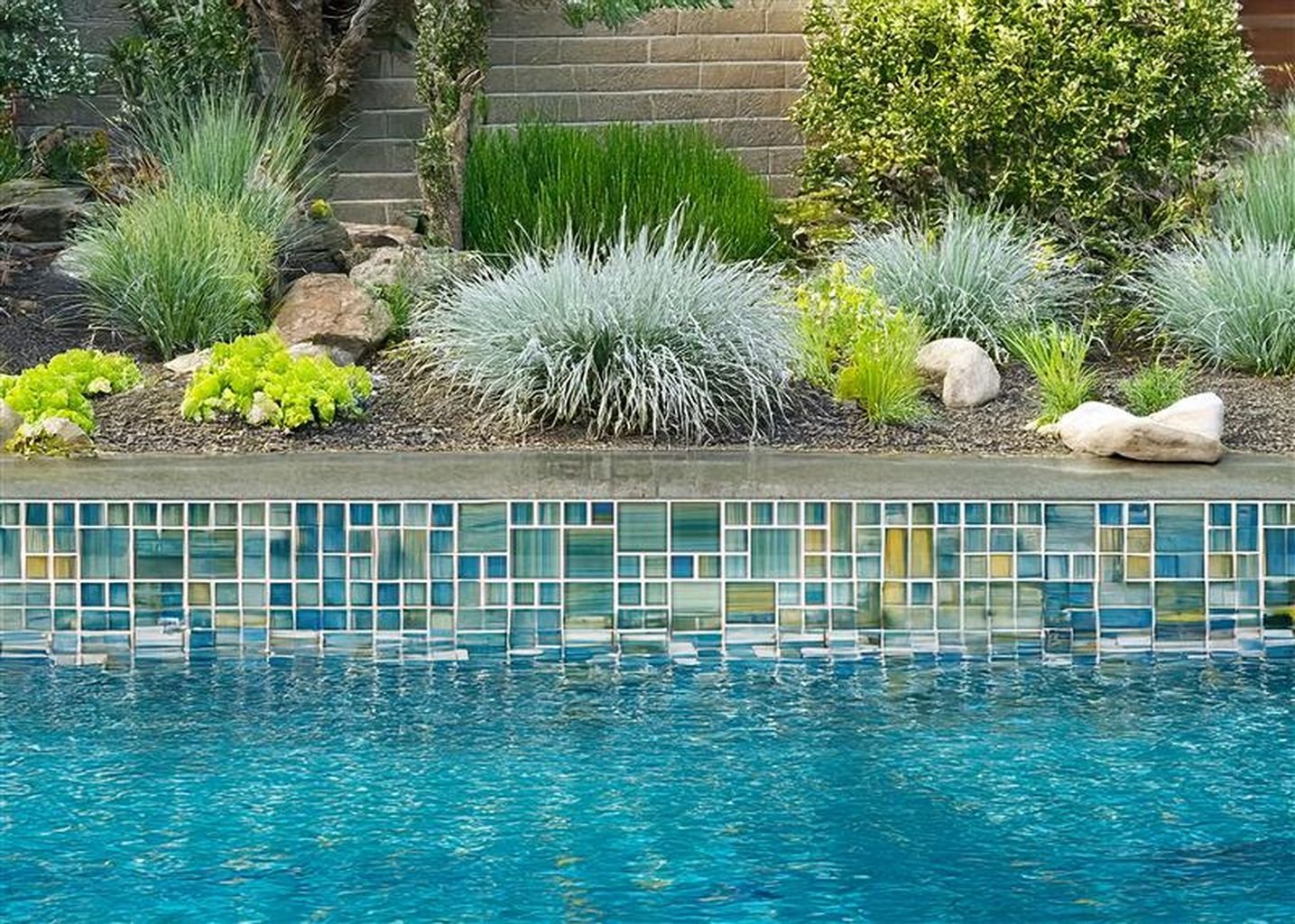
Glass tile represents the top tier of modern pool design. Because glass is non-porous, it will never absorb water, stain, or foster algae growth. Glass tiles reflect and refract light, creating a shimmering effect as sun rays strike the water. While glass tiles require a higher initial investment and specialized installation techniques to accommodate thermal expansion, their color will never fade, providing unmatched visual appeal and longevity.
Comparing Pool Tile Materials
Selecting the right material requires comparing key performance metrics, maintenance demands, and structural characteristics.
| Material Type | Moisture Absorption | UV & Chemical Resistance | Visual Effect & Finish | Installation Complexity |
| Ceramic | Low (1% to 3%) | Good; protective glaze shields against fading | Wide color variety; hand-painted or classic gloss | Standard installation process |
| Porcelain | Impervious (<0.5%) | Excellent; dense structure resists chemical wear | Matte, stone-look, textured, or glazed styles | Standard to moderate installation |
| Glass | Completely Non-Porous (0%) | Superior; completely immune to chemical discoloration | Iridescent, transparent, or metallic light reflections | Specialized techniques and modified thin-set required |
Color and Scale Selection Strategies
The size and color of pool tile dramatically alter the appearance of pool water and the perception of the surrounding backyard space.
Tile Color Dynamics
Water reflects the sky while absorbing red wavelengths of light, meaning pool tile colors interact with natural light to create dynamic water shades:
- Blue and Teal Shades: Enhance the natural blue appearance of water, creating a classic, crisp aquatic aesthetic ranging from bright sky blue to deep ocean cobalt.
- Earth Tones and Greys: Brown, beige, charcoal, and slate tiles blend seamlessly into natural landscapes, producing soft, lagoon-like green or deep blue-green water tones.
- White and Off-White: Creates bright, high-clarity water reflections that showcase clean pool lines, making smaller pool basins feel larger.
- Dark Charcoal and Black: Absorbs solar heat to warm pool water naturally while creating dramatic, mirror-like reflections on the water’s surface.
Scale and Format Options
Tile formats range from micro-mosaics to large-format sheets. Small 1×1-inch or 2×2-inch mosaic tiles adhere well to curved pool steps, spa spillways, and contoured pool walls because their frequent grout lines allow them to flex around tight radii. Larger format tiles, such as 6×6-inch squares, work exceptionally well on long, straight waterline stretches, minimizing the total surface area dedicated to grout lines and simplifying routine scrubbing.
Installation and Structural Considerations
Even the highest quality pool tile will fail prematurely if improperly installed. Pool environments present extreme structural demands, including hydrostatic water pressure, temperature shifts, and chemical submersion.
Standard indoor mastic or standard tile thin-set adhesives cannot withstand continuous water immersion. Professional applications require polymer-modified, waterproof thin-set mortars formulated specifically for submerged applications. When renovating older pools or applying new waterline finishes, contracting qualified specialists for professionalpool tile installation ensures that expansion joints, waterproof membranes, and chemical-resistant epoxy grouts are applied correctly, preventing tile detachment or water seepage behind the shell.
Furthermore, grout selection is just as important as tile selection. Traditional cementitious grout is susceptible to acid erosion from pool chemicals over time. Utilizing high-performance epoxy grout creates an impenetrable, stain-resistant seal that holds tiles firmly in place while preventing algae from anchoring in the joints.
Routine Care for Long-Lasting Tile Finishes
Maintaining pool tile in pristine condition requires a combination of balanced water chemistry and regular physical cleaning:
- Maintain Chemical Balance: Keeping water pH between 7.2 and 7.6 and calcium hardness within recommended levels prevents calcium carbonate from precipitating out of the water and forming hard white scale along the tile line.
- Routine Scrubbing: Use a nylon pool brush along the waterline weekly to clear body oils and floating debris before they bake onto tile glazes under direct sunlight.
- Gentle Scale Removal: If light calcium lines form, clean them using a mild, pool-safe tile cleaner or a gentle pumice stone designed for pool surfaces. Avoid harsh metal wire brushes that can scratch glass glazes or damage grout joints.
Elevating Your Pool Finish
Selecting the perfect pool tile is a key step in creating an outdoor water feature that combines long-term durability with exceptional visual beauty. By evaluating ceramic, porcelain, and glass materials against your budget, aesthetic preferences, and maintenance expectations, you can choose a finish that enhances your pool for decades. Pairing quality materials with proper installation and routine water care ensures that your pool’s waterline remains a vibrant, easy-to-clean accent that elevates the entire backyard environment.